
Hardeman County Sex Offender Checks
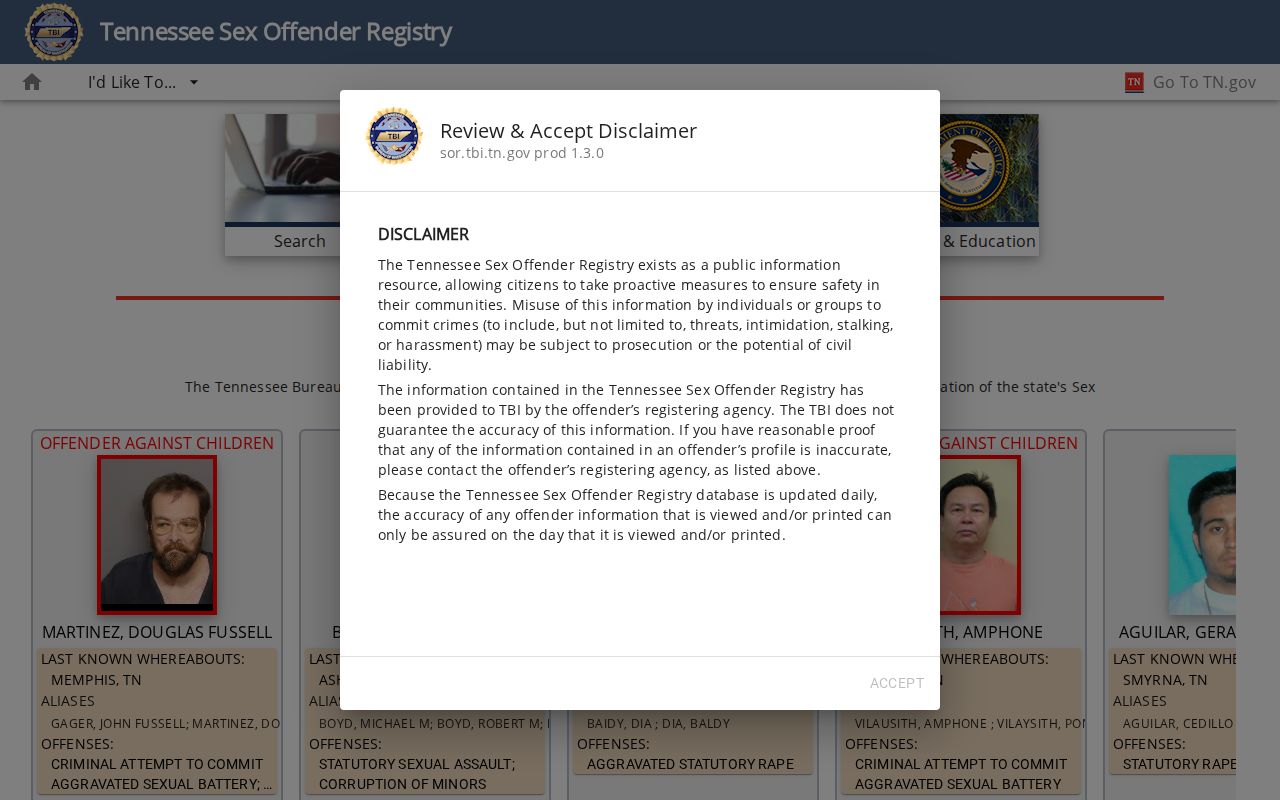
The Tennessee Sex Offender Registry is the main public search for Hardeman County. TBI updates it daily from information supplied by registering agencies. Searchers must accept a disclaimer before using the interface. The registry offers name and geographic paths, with map and list results that can be narrowed by county, city, ZIP, address, or proximity. Exact controls can change, so read the live labels at the time of use.
A sound search uses more than a map pin. Open the profile and review its current status, last report information, listed address, classification, offense data, and registering agency. TBI does not guarantee perfect accuracy and directs documented corrections to the registering office. Search Hardeman County as a whole and the relevant municipality because spelling or location choices can change the returned set. For a person or place that may cross Tennessee's border, add the federal NSOPW search.
Hardeman Registry Compliance at Suite B
The local compliance contact is Jackie Kelley at the Hardeman County Sheriff's Office contact page, 505 S Main Street, Suite B, Bolivar. The sheriff's official homepage provides the wider county agency route. The main telephone number is 731-658-3971 and the listed email is jkelley@hcsowesttn.org. The official sources reviewed did not publish appointment hours or a local registration fee, so call before going to the office.
HCSO Registry Compliance
505 S Main Street, Suite B
Bolivar, TN 38008
731-658-3971
jkelley@hcsowesttn.org
Use that contact for a documented local address concern, a question about the registering agency, or suspected noncompliance. The Hardeman County government hub can route questions about other county offices. For registry administration, TBI lists 1-888-837-4170 and tbisormgr@tbi.tn.gov. Do not confront a registrant. Giving the agency the profile identifier, the observed discrepancy, and the date viewed is safer and more useful than acting on a screenshot alone.
Tennessee Sex Offender Registry Searches
The official Tennessee Sex Offender Registry combines statewide records with county and city filters. Its public interface supplies name and place searches after the user accepts the terms.
Follow the search in a set order so that a broad map does not replace a profile review:
- Open the registry and read and accept the current disclaimer.
- Search by first and last name, or choose Hardeman County and add a city, ZIP, address, or proximity when useful.
- Review the map or list and use profile details to distinguish records rather than relying on location alone.
- Open the full profile, note the viewing date, status, registering agency, and last registration or report information.
| Field Label | Type | Required | Notes |
|---|---|---|---|
| Last Name | Text | No | Use with first name when a name is known. |
| First Name | Text | No | Helps narrow similar surnames. |
| County | Selection | No | Choose Hardeman for a countywide result. |
| City / ZIP / Address | Text or selection | No | Supports a place-based search. |
| Proximity / Map | Geographic | No | Review the linked profile, not only pin position. |
Daily Hardeman Registry Results Need Review
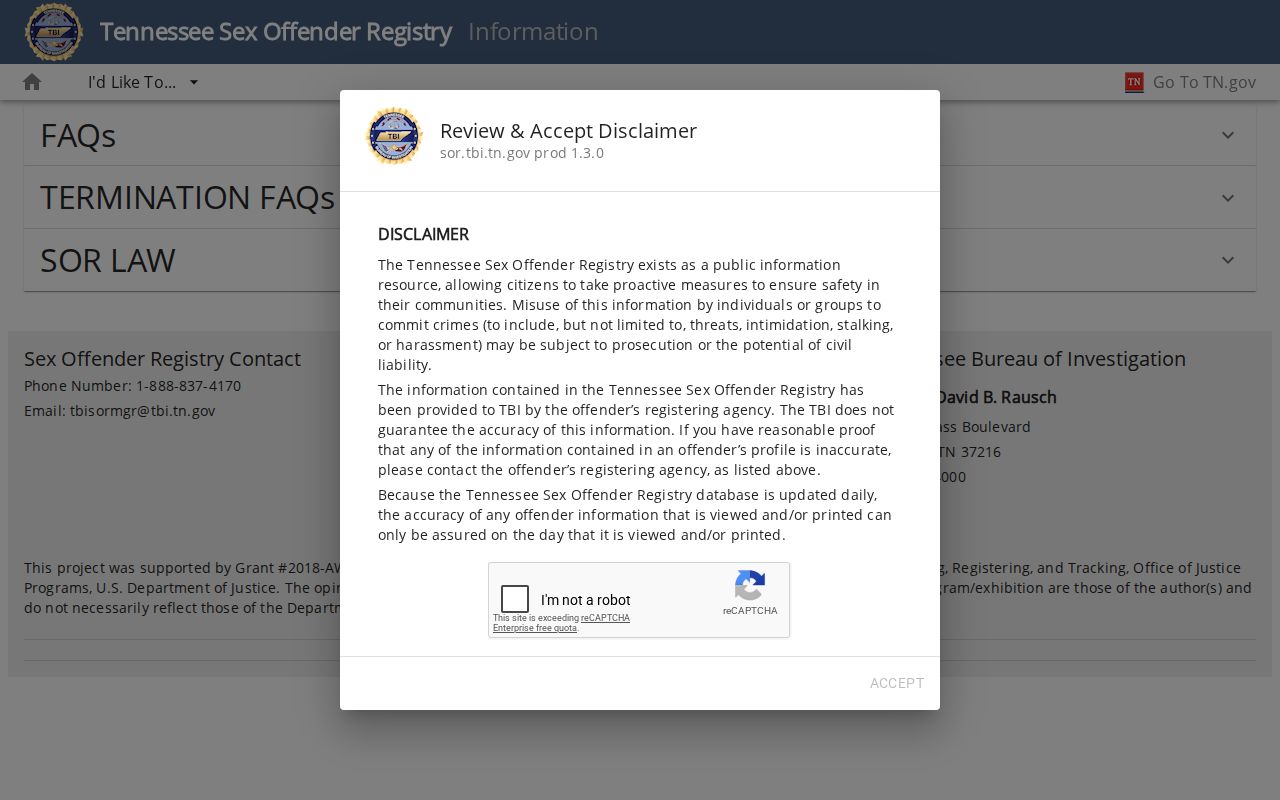
The TBI registry information page explains reporting cycles, statutes, correction channels, and the limits of public data. It is the companion source to the search screen.
A printed profile is reliable only as of the viewing date. “Not Available” beside the last registration or report field means TBI has not received that information as directed. It does not authorize a guess about compliance. Likewise, a map pin should not be treated as a surveyed boundary or a promise that the person is physically present at that moment. Reopen the current profile when making a new safety plan, and send an accuracy concern to the registering agency with documents when possible.
Note: Save the access date with any printout because the TBI registry is updated from agency reports each day.
Registry Profiles: What They Show
A public registry profile brings together identifiers, status, location, and statutory offense details. The fields serve identification and community awareness. They should be read in context. An alias helps distinguish records, while a registration status describes the registry entry at the time of viewing. It does not replace the full criminal judgment.
| Name & Aliases | Legal name and known aliases reported to the registry. |
|---|---|
| Photo & Description | Photograph, physical details, and sometimes scars, marks, or tattoos. |
| Address / Location | Reported location data, subject to the registry's current records and status. |
| Offense & Statute | Offense date, description, Tennessee Code section, and statutory text when supplied. |
| Classification | Sexual offender, violent sexual offender, juvenile category, or another displayed designation. |
| Registration Status | Active or another status, registering agency, and last registration or report information. |
| Other Identifiers | Offender ID, vehicles, and other submitted details may appear. |
An “inactive-incarcerated” status can mean the person remains within the registry system while held in custody. Check the profile, the registering agency, and the appropriate custody system before drawing a conclusion from that label.
Hardeman Registry and NSOPW Layers
The National Sex Offender Public Website operated by the U.S. Department of Justice searches participating jurisdictions across state lines. It is useful when a name or address question is not confined to Tennessee.
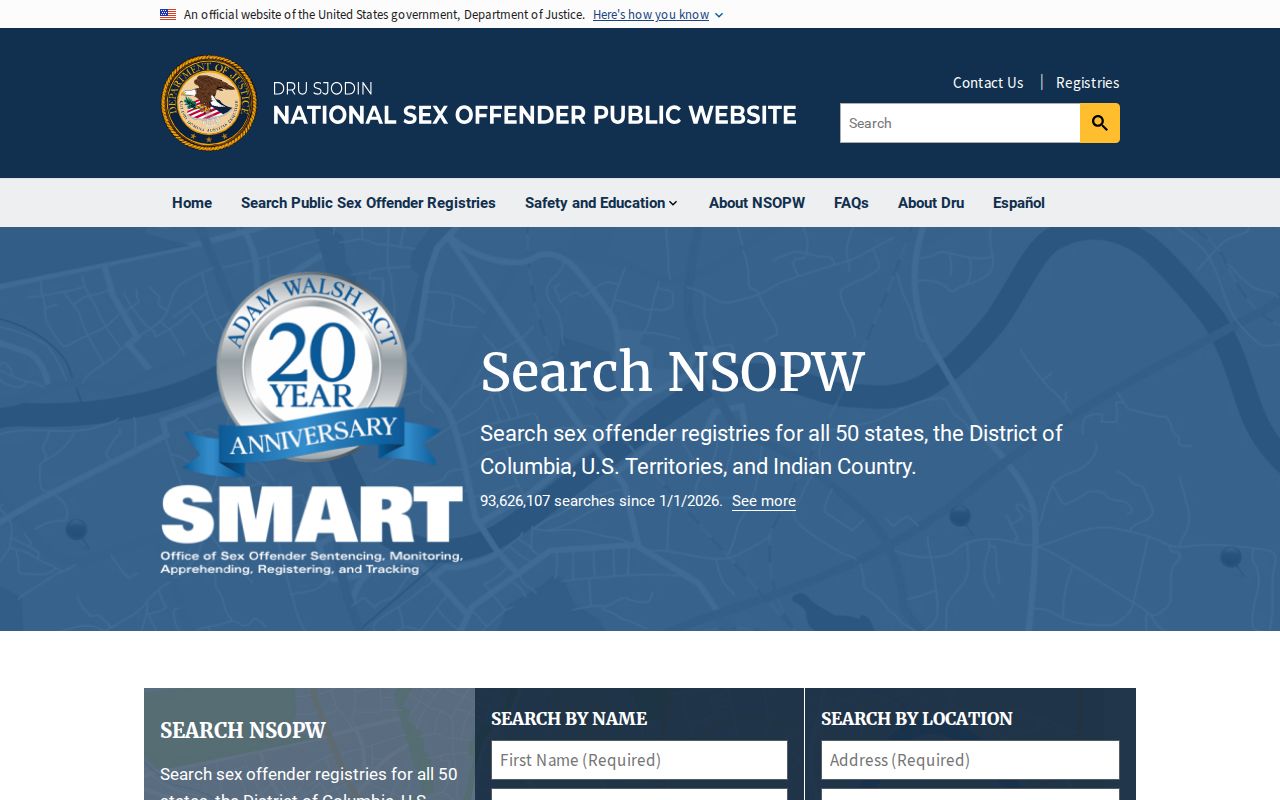
NSOPW is a cross-jurisdiction layer, while the TBI registry is the direct Tennessee source. Begin with TBI for a Hardeman County filter and local registering-agency details. Add NSOPW when the search spans another state or when a broader name search is needed. If the services differ, inspect the source profile and contact the jurisdiction that supplied it. A national result is not a replacement for current Hardeman County compliance information.
Registration Levels and Duties in Tennessee
Tennessee uses statutory categories rather than a simple public risk score. A sexual offender generally verifies annually around the person's birthday. A violent sexual offender verifies quarterly during March, June, September, and December. The violent juvenile sexual offender category follows separate rules. Duration and termination depend on the offense, classification, and current law.
| Tennessee Category | General Duration Note | In-Person Verification |
|---|---|---|
| Sexual offender | Some may request termination after the statutory minimum and eligibility review. | Annually, within seven days before or after the birthday. |
| Violent sexual offender | Generally lifetime, with narrow statutory termination provisions. | Quarterly in March, June, September, and December. |
| Violent juvenile sexual offender | May seek termination at age 25 only if detailed statutory criteria are met. | Governed by the juvenile category requirements. |
Both adult categories must report most information changes in person within 48 hours. Online identifiers have a 72-hour reporting window. Tenn. Code Ann. § 40-39-202 lists registration offenses, §§ 40-39-207, -218, and -219 address classification or termination issues, and § 40-39-211 states specified residence and presence restrictions. Current law and the actual profile control.
Reading Hardeman Registry Status Terms
Registry terms describe legal duties and reported data, not a new court finding. “Active” indicates an active registry record. “Inactive-incarcerated” can reflect custody while registration data remains visible. “Offender against children” is a statutory designation. “Not Available” in a report field means the state has not received that item as directed. None of those labels should be expanded into facts the profile does not state.
- Registering agency
- The office responsible for receiving and forwarding the person's registration information.
- Last registration / report
- The most recent date shown for a required registry contact or submitted information.
- Classification
- The statutory Tennessee category that sets reporting and duration rules.
- Offender ID
- A registry identifier that can help distinguish profiles with similar names.
When a term is unclear, call HCSO or TBI rather than inferring current location or conduct. The signed judgment and governing statutes answer questions that a public summary cannot.
Reporting Hardeman Registry Inaccuracies
Send a suspected address error or other profile inaccuracy to the registering agency shown on the profile. For a Hardeman County registration handled by HCSO, use the Suite B compliance contact. Provide the profile identifier, field at issue, viewing date, and reliable documentation. TBI administers the statewide registry and can answer system questions through its published telephone number and email.
A suspected violation should also go to law enforcement. Do not investigate by approaching the registrant, entering private property, or publishing personal allegations. The agency can compare the report with the registration file and decide what follow-up is lawful. This process protects both community safety and the accuracy of the official record.
Tennessee's reporting windows make timing important. Most changes for adult categories must be reported in person within 48 hours, while online identifiers generally use 72 hours. A profile that appears stale should be reported, not “corrected” through public confrontation.
Using Registry Information Lawfully
Registry information supports personal, family, and community safety planning. It can help residents identify the correct public profile, understand the listed status, and contact officials about a documented concern. TBI warns that it cannot guarantee accuracy, so users should verify a material issue through the registering agency and avoid treating a map point as proof of present conduct.
Public access does not authorize threats, stalking, intimidation, harassment, or vigilantism. Tennessee's registry statutes appear at Tenn. Code Ann. §§ 40-39-201 through 40-39-219. Section 40-39-214 governs disclosure of registry information, and § 40-39-208 addresses violations of registry requirements.
Misuse can bring legal consequences: TBI warns that threatening, intimidating, stalking, or harassing a registrant with registry information may lead to criminal prosecution or civil liability under Tennessee law, including the disclosure framework in Tenn. Code Ann. § 40-39-214.
Contact HCSO for local compliance and TBI for registry administration. Call emergency services for an immediate threat. Do not confront a registrant or the household at a listed address.